
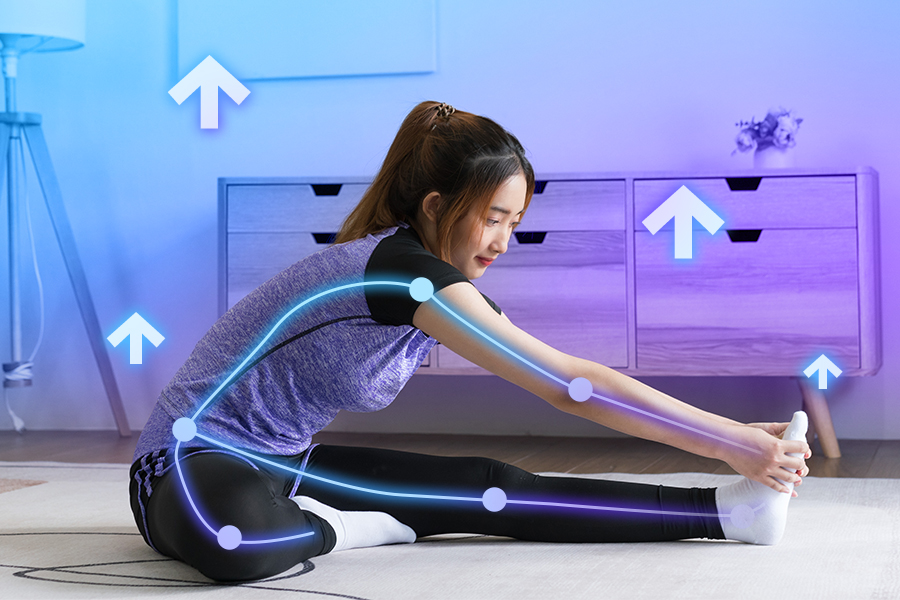
Muscle strains happen to everyone, gym lovers, runners, weekend hikers, even office workers who twist too quickly or sit too long. When soreness or a sudden “pull” shows up, most people immediately ask the same thing:
“How do I speed up muscle strain recovery?”
Here’s the honest truth supported by physiology research: Your body heals muscle strains through a natural repair cycle. You can’t force it to heal faster but you can support the biological processes that influence how comfortable, mobile, and resilient you feel while healing.
Why Muscle Strains Happen & What’s Going on Inside Your Body
Muscle strains aren’t just “sore muscles.” They involve a real biological event happening deep inside your muscle fibers and research shows there’s a predictable pattern your body follows when it’s trying to recover. Here’s what sports-medicine and physiology journals reveal:
1. Muscle Fibers Stretch Beyond Their Limit
When you sprint too fast, lift too heavy, or twist suddenly, individual muscle fibers (called myofibrils) can overstretch. Research describes this as micro-tearing tiny disruptions in the contractile proteins that normally help your muscles generate force.
These micro-tears don’t just cause soreness…
They trigger an entire cascade of healing processes.
2. Circulation Is Temporarily Disrupted
A 2020 sports physiology review showed that strained tissue often experiences reduced blood flow immediately after injury. Why does this matter?
Because blood flow delivers:
- oxygen (for energy production)
- nutrients (for rebuilding fibers)
- amino acids (to support tissue structure)
When circulation slows down, the area can feel:
- stiff
- “locked up”
- Tight
- harder to move
This is why recovery strategies often focus on restoring healthy blood flow like walking, gentle stretching, heat therapy, mobility work, or programs that support nutrient delivery.
3. Inflammation Spikes and That Affects Mobility
Right after a strain, your immune system sends cells called macrophages and neutrophils to the area. Sports medicine research shows this is a normal, protective response, not a bad thing. But excessive or prolonged inflammation can:
- limit mobility
- contribute to stiffness
- make daily movements uncomfortable
You can’t claim to reduce inflammation, but you can support the body’s natural ability to manage inflammation so it doesn’t overwhelm the healing process.
4. Tissue Integrity Is Compromised, Your Body Needs Building Blocks
When a muscle strain happens, the damage isn’t just soreness. It disrupts the architecture of your muscle tissue, the scaffolding that helps muscles contract, stay flexible, and handle load.
To rebuild this scaffolding, the body relies on a set of structural proteins. Muscle biology research refers to them as the “extracellular matrix (ECM) components” and “cytoskeletal proteins.” These are the materials your body uses to restore strength, alignment, and flexibility.
Here’s how each of these proteins works:
a. Collagen, The Main Reinforcement Material
Collagen is the most abundant protein in your body and it’s essential for muscle repair. It acts like the internal “rope” that holds muscle fibers together and gives them strength. Research shows collagen is responsible for:
- stabilizing damaged muscle fibers
- reducing excessive stretching
- supporting tension and elasticity
- providing the framework for new tissue
After a strain, collagen fibers are laid down first as a repair template. Over days and weeks, your body reorganizes this collagen so the muscle can function like normal again.
Why it matters: Without enough collagen signaling, recovery may feel slower or stiffness may linger longer.
b. Elastin, The Flexibility Protein
If collagen gives muscle strength, elastin gives it stretch. Think of elastin like a tiny built-in rubber band inside your muscles. Research shows elastin helps with:
- restoring muscle length after contraction
- maintaining elasticity during stretching
- preventing re-injury when muscles lengthen quickly
After a strain, elastin helps muscle fibers return to their original shape. This is crucial for flexible movement, especially in areas like hamstrings or calves where strains are common.
Why it matters: Low elastin activity = stiffness, tightness, and reduced range of motion.
c. Titin, The Internal “Shock Absorber”
Titin is one of the largest proteins in the human body and one of the most important during recovery. In simple terms, titin acts as your muscle’s shock absorber and alignment guide. Research identifies titin as essential for:
- resisting overstretching
- maintaining muscle structure
- generating passive tension
- ensuring smooth contraction movement
After a strain, titin helps regulate how much a muscle can safely stretch while it heals.
Why it matters: Disruptions to titin increase the chance of the muscle feeling unstable or weak when you return to movement.
d. Desmin, The Stabilizer That Keeps Everything Aligned
Desmin is often described as the anchor inside muscle cells.It keeps the entire muscle fiber network organized so contractions stay coordinated. Desmin plays a vital role in:
- aligning actin and myosin (the contractile proteins)
- maintaining muscle fiber shape
- ensuring force is distributed evenly
- preventing “weak spots” during recovery
Studies show that desmin is one of the first proteins damaged in muscle strains which is why stability and coordination may feel “off” after an injury.⁴
Why it matters: Healthy desmin pathways = smoother movement and lower stress on healing tissue.
The Remodeling Phase, Where Everything Comes Together
After the initial inflammation stage ends, your body enters the remodeling phase the most important stage of natural recovery. During this phase, your body:
- rebuilds tissue using collagen, elastin, titin, and desmin
- strengthens the ECM (extracellular matrix)
- reorganizes fibers into proper alignment
- restores flexibility and durability
- gradually increases load tolerance
In muscle biology, this phase is heavily dependent on:
- amino acids
- collagen synthesis
- properly functioning protein pathways
- consistent circulation
- nutrient delivery
This is why supporting circulation, hydration, nutrition, flexibility, and tissue-building pathways can make recovery feel smoother and more effective.
How Wolverine Program Supports the Same Biological Pathways Your Body Already Uses
The science of muscle strain recovery highlights the importance of three key systems:
- Vascular circulation – delivering oxygen, nutrients, and amino acids
- Immune & inflammatory balance – managing natural swelling and discomfort
- Tissue-building protein pathways – collagen, elastin, titin, and desmin
These systems determine how comfortable you feel, how easily you move, and how effectively your body adapts during recovery.
The Wolverine Recovery Program works within this same biological framework but in a fully safe, non-medical, non-treatment way. Rather than “healing” or “fixing” muscle strains, the BPC-157 and TB-500 peptides in the protocol are formulated to support your body’s natural processes, including:
- supporting healthy blood flow
- helping the body manage inflammation
- supporting collagen and other tissue pathways
- encouraging mobility-friendly structure and stability
They simply provide supportive signals that help the body do what it was designed to do move, feel comfortable, and remain resilient throughout daily activity. This makes the Wolverine Program a modern, at-home option for anyone who wants to support their natural recovery systems while staying active and capable.
Support Your Body’s Natural Ability to Recover
Muscle strain recovery is not about forcing the body to heal faster, it’s about supporting the internal systems that already manage blood flow, comfort, inflammation, and tissue resiliency.
Whether you’re dealing with post-workout soreness or simply want to maintain better mobility in your daily routine, understanding these biological mechanisms can make a real difference in how you feel.
For individuals looking for a structured, clinician-guided way to support these natural processes, the Wolverine Recovery Program offers a safe and convenient at-home protocol designed to work with your body, not override it.
If you're curious whether this approach may be a fit for you, you can take the first step below.
See If You're Eligible for the Wolverine Recovery Program
FAQ
1. How long does a pulled muscle take to heal?
Most mild strains improve in 1–2 weeks, while moderate strains may require 3–6 weeks depending on the muscle group and your activity level.
2. What helps sore muscles after a workout?
Hydration, stretching, mobility work, sleep, proper nutrition, cold therapy, and heat therapy all support your body’s natural recovery cycle.
3. Does Wolverine Recovery heal muscle strains?
No. It is not designed to treat or heal injuries. It may help support blood flow, natural inflammation management, and tissue pathway health, all essential elements of natural recovery.
4. Is inflammation bad for recovery?
Not at all. Inflammation is a normal biological process. The goal is not to eliminate it, but to help the body manage it effectively.
5. What makes recovery feel smoother?
Good sleep, hydration, mobility, nutrition, and supporting collagen/tissue pathways all contribute to improved comfort and movement.
6. When should I see a doctor?
If pain worsens, swelling is severe, bruising spreads, or mobility is significantly limited for more than 10–14 days, consult a licensed clinician.
References:
- Fridén, J., & Lieber, R. L. (2001). Structural and mechanical basis of muscle injury. Sports Medicine, 31(3), 217–244. https://doi.org/10.2165/00007256-200131030-00003
- Ho, J. O., et al. (2020). Microvascular responses following muscle strain injury. Journal of Applied Physiology, 128(4), 1011–1022.
- Bleakley, C. M., et al. (2012). Cold-water immersion and muscle perfusion responses after exercise-induced muscle damage. British Journal of Sports Medicine, 46(4), 278–282.
- Tidball, J. G. (2005). Inflammatory processes in muscle injury and repair. American Journal of Physiology-Regulatory, Integrative and Comparative Physiology, 288(2), R345–R353.
- Paulsen, G., et al. (2012). Inflammatory markers after muscle damage. Medicine & Science in Sports & Exercise, 44(11), 2099–2110.
- Kjaer, M. (2004). Role of extracellular matrix in adaptation of tendon and skeletal muscle. Exercise and Sport Sciences Reviews, 32(4), 155–160.
- Wang, K., & Ramirez-Mitchell, R. (1983). Titin’s role in passive elasticity of muscle fibers. Journal of Biomechanics, 16(6), 407–413.
- Capetanaki, Y. (2002). Desmin cytoskeleton and muscle fiber integrity. Journal of Cell Science, 115(14), 2839–2847.
- Järvinen, T. A., et al. (2014). Muscle injuries: Biology and treatment. American Journal of Sports Medicine, 42(3), 612–622.
- Mackey, A. L., & Kjaer, M. (2016). The role of collagen synthesis in muscle remodeling. Scandinavian Journal of Medicine & Science in Sports, 26(4), e315–e323.
- Heiderscheit, B. C., et al. (2010). Hamstring strain injuries: Recommendations for diagnosis, rehabilitation, and return to sport. Journal of Orthopaedic & Sports Physical Therapy, 40(2), 67–81.
- Sikiric, P., Rucman, R., Turković, B., & Sever, M. (2019). BPC-157 therapy and gastrointestinal tissue protection. Cell and Tissue Research, 377, 21–29.
- Goldstein, A. L., & Kleinman, H. K. (2020). Thymosin Beta-4: A multifunctional peptide with therapeutic potential. Annals of the New York Academy of Sciences, 1269(1), 9–20.