
You’ve decided to get serious about your health. Maybe you’re starting Nuri’s Body Recomposition Program featuring Retatrutide, or you’re just curious about GLP-1–based weight-loss support. Either way, one question always pops up first:
“What should I actually eat while using GLP-1 peptides?”
The short answer: you’ll likely feel full on less food—but what’s on your plate still matters. The right mix of high-fiber, low-carb foods and enough protein can help you feel satisfied, protect your muscles, and make the whole journey more comfortable. The wrong mix (too little protein, lots of ultra-processed carbs) can leave you tired, constipated, and losing more muscle than you’d like.
In this guide, we’ll walk through:
- Why protein is so important for weight loss on GLP-1s (and what research says about “does protein help with weight loss?”)
- How to build simple meals around lean protein + fiber-rich, lower-carb foods
- A 7-day protein diet plan for weight loss you can bring to your Nuri clinician and adapt to your life
Think of this as your friendly, research-backed roadmap for what to eat while using GLP-1 peptides, so Retatrutide isn’t doing all the work alone, and your food is working with your protocol, not against it.
Important: This article is educational only and not medical advice. Retatrutide is an investigational multi-receptor peptide that is not FDA-approved to diagnose, treat, cure, or prevent any disease. Always follow the plan you create with your licensed clinician.
Why Food Still Matters on GLP-1 Peptides
GLP-1–based therapies (including triple agonists like Retatrutide) have shown substantial average weight reductions in clinical trials. In a phase 2 study, adults with obesity treated with Retatrutide for 48 weeks experienced large, dose-dependent decreases in body weight, with mean reductions over 20% at higher doses. But there’s a catch:
Because these medications reduce appetite so effectively, people often:
- Eat much less overall
- Miss out on protein and fiber
- Lose muscle mass along with fat
A recent JAMA Internal Medicine patient guide emphasizes that people on GLP-1 medications commonly lose both fat and lean mass, and may experience GI symptoms that make eating harder; it recommends focusing on adequate protein, fiber, and symptom-friendly meals to preserve health and stay on therapy.
That’s why nutrition priorities during GLP-1 support usually look like this:
- Protect muscle mass → prioritize protein
- Support digestion & appetite regulation → prioritize fiber
- Maintain steady energy & blood sugar → choose whole, minimally processed carbs and healthy fats
Let’s break those down.
Why Is Protein Important for Weight Loss?
So, why is protein important for weight loss, especially if you’re using GLP-1 peptides?
Over the past two decades, higher-protein diets have consistently been linked to better weight-management outcomes. A major review in the American Journal of Clinical Nutrition found that high-protein diets (around 25–30% of total calories) tend to:
- Improve total weight loss and weight-loss maintenance
- Increase satiety, so people naturally eat fewer calories
- Support greater fat loss and better preservation of lean mass compared with lower-protein diets
In adults with metabolic risks such as metabolic syndrome, higher-protein diets have also been associated with better weight loss and cardiometabolic markers than standard-protein diets.
When appetite drops (as it usually does on GLP-1 peptides), your total calories go down. Without a plan, most people end up cutting protein first, simply because quick carbs and snack foods are easier to grab.
That’s a problem because:
- Muscle is your body’s metabolic engine.
- Losing too much muscle can leave you weaker, more fatigued, and with a slower metabolism.
- Protein helps your body repair tissue, especially if you’re active or doing resistance training.
How much protein should you aim for?
Many obesity and GLP-1 nutrition experts suggest a ballpark of 1.0–1.5 g of protein per kilogram of body weight per day for most moderately active adults, tailored to health status. For example (approximate):
- 60 kg (132 lb) → 60–90 g protein/day
- 75 kg (165 lb) → 75–113 g protein/day
Always adjust this range with your clinician, especially if you have kidney disease or other medical conditions.
Does Protein Help With Weight Loss?
Short answer: yes, when used in a balanced way.
Trials summarized by Leidy and colleagues show that people on higher-protein, calorie-restricted diets generally lose more fat mass, preserve more lean mass, and report higher fullness than people on lower-protein diets.
Protein helps with weight loss by:
- Increasing satiety (you feel fuller longer)
- Reducing spontaneous calorie intake
- Supporting lean tissue, especially when combined with resistance training
So while GLP-1 peptides reduce how much you want to eat, protein shapes what your body is losing, helping shift the balance toward more fat loss and less muscle loss.
High-Fiber, Low-Carb Foods, Your GLP-1 Best Friends
Next priority: fiber.
Randomized trials and cohort studies repeatedly show that increasing dietary fiber is linked with:
- Lower overall energy intake
- Greater satiety
- Modest but meaningful reductions in body weight and waist circumference over time.
In the POUNDS Lost trial, adults with overweight or obesity following calorie-restricted diets lost more weight and were more likely to stay on their plan when they ate more dietary fiber, independent of the overall macronutrient split..
In simple terms: fiber helps you:
- Feel full on fewer calories
- Keep digestion moving (important if GLP-1s slow gastric emptying)
- Stabilize blood sugar and energy levels
Examples of high fiber low carb foods
These high fiber low carb foods pair nicely with GLP-1 support:
- Non-starchy vegetables: Broccoli, asparagus, spinach, kale, cabbage, green beans, zucchini
- Low-sugar fruits (small portions): Berries, kiwi, citrus, sliced apple or pear with skin
- Legumes (moderate carbs but high fiber + protein): Lentils, chickpeas, black beans
- Seeds & nuts (portion-controlled): Chia, flax, pumpkin seeds, almonds, walnuts
- Whole grains in small portions: Quinoa, oats, barley, especially helpful if you’re active
A growing body of research suggests that fiber intake is one of the strongest predictors of long-term weight-loss success and dietary adherence, even after accounting for total calories (Miketinas et al., 2019).
So on GLP-1 peptides, think: “Smaller portions overall, but every bite works harder for me, more fiber, more protein, fewer empty carbs.”
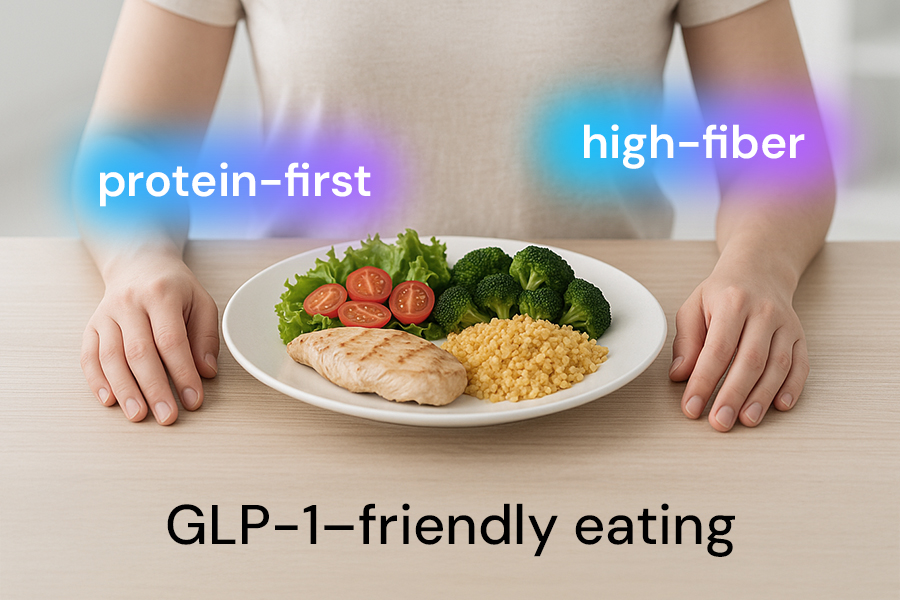
GLP-1–Friendly Plate Blueprint
When you sit down to eat during Nuri’s Body Recomposition Program featuring Retatrutide, use this simple mental checklist:
- Start with protein (the anchor of the meal). Grilled chicken or fish, tofu, tempeh, Greek yogurt, eggs, cottage cheese, or beans.
- Add a big serving of high-fiber plants. Aim for at least half your plate as vegetables: roasted broccoli, salad with mixed greens, sautéed spinach, roasted Brussels sprouts, etc.
- Layer in smart carbs (if you want/need them). A small side of quinoa, sweet potato, oats, or other whole grains depending on hunger and activity level.
- Finish with healthy fats. Olive oil drizzle, avocado, or a sprinkle of nuts or seeds.
A recent review on GLP-1–related GI symptoms notes that smaller, lower-fat meals eaten slowly tend to be better tolerated and can reduce nausea, reflux, and bloating.
Try sipping water regularly throughout the day instead of chugging large amounts with meals this can also help reduce discomfort.
Sample 7-Day Protein Diet Plan for Weight Loss
This 7-day protein diet plan for weight loss is a template you can show your clinician. It’s not a strict prescription, swap items based on your culture, preferences, and tolerances.
Day 1
- Breakfast: Greek yogurt (plain) + berries + chia seeds
- Lunch: Grilled chicken salad (mixed greens, cucumber, tomato, olive-oil dressing)
- Snack: Edamame or a small protein shake
- Dinner: Baked salmon, roasted broccoli, a few slices of sweet potato
Day 2
- Breakfast: Scrambled eggs with spinach and tomatoes
- Lunch: Lentil soup with extra veggies
- Snack: Cottage cheese with cucumber slices
- Dinner: Tofu stir-fry with broccoli and bell peppers over cauliflower “rice”
Day 3
- Breakfast: Protein smoothie (whey or plant protein, spinach, berries, unsweetened milk)
- Lunch: Turkey or tempeh lettuce wraps with avocado
- Snack: Handful of almonds or walnuts
- Dinner: Grilled shrimp with green beans and a small quinoa side
Day 4
- Breakfast: Overnight oats made with Greek yogurt + chia + cinnamon (small portion)
- Lunch: Chickpea & roasted veggie bowl with tahini drizzle
- Snack: Boiled egg + cherry tomatoes
- Dinner: Baked cod, roasted Brussels sprouts, spoonful of barley
Day 5
- Breakfast: Omelet with mushrooms, onions, and a little cheese
- Lunch: Big salad with grilled tempeh, seeds, and mixed greens
- Snack: Plain yogurt with ground flaxseed
- Dinner: Lettuce-wrapped turkey or veggie burger + roasted vegetables
Day 6
- Breakfast: Protein shake + half banana + one spoon nut butter
- Lunch: Black bean chili loaded with vegetables
- Snack: Apple slices with a thin layer of peanut butter
- Dinner: Roast chicken thigh, steamed asparagus, small serving of brown rice
Day 7
- Breakfast: Cottage cheese with pineapple chunks (in juice, drained) + chia
- Lunch: Salmon salad on a bed of greens (olive-oil vinaigrette)
- Snack: Roasted chickpeas or edamame
- Dinner: Chicken or tofu curry with lots of veggies over cauliflower rice
Tip: On low-appetite days, try to keep the protein and cooked vegetables, and shrink the carbs and fats instead of skipping meals entirely.
What to Limit or Avoid While Using GLP-1 Peptides
There are no completely “forbidden” foods, but GLP-1 nutrition and GI guidelines recommend limiting certain patterns because they can worsen side effects or make weight loss harder.
1. Heavy, greasy, or deep-fried foods
These can worsen nausea, reflux, and stomach discomfort when gastric emptying is slower.
2. Sugary drinks and ultra-processed sweets
Soda, energy drinks, sweetened coffee drinks, and large juice servings add calories with little fiber and can spike blood sugar.
3. Large portions of refined starches
Big servings of white bread, pastries, fries, chips, or white rice and pasta. If you include them, keep portions small and always pair with protein and vegetables.
4. Excess alcohol
Alcohol places extra load on the liver and may amplify dizziness or nausea. Always check with your clinician about what’s safe for you.
5. Carbonated beverages (for some people)
These can increase bloating or belching when digestion is slower; some patients feel better when they reduce carbonation.
If a food consistently makes your symptoms worse, note it in a simple food journal and talk with your Nuri clinician about swaps.
Movement, Hydration, and Muscle Protection
Diet isn’t the only piece. Expert guidance on GLP-1 medications stresses pairing them with movement and strength work to protect muscle and overall metabolic health. Aim for regular walking or light cardio most days.
- Add 2–3 days of resistance training (bands, body-weight moves, or weights) if your clinician clears it.
- Drink enough water throughout the day; dehydration can worsen fatigue and constipation.
Retatrutide’s triple action is designed to help you eat less, burn more, and support healthier metabolic signals; your nutrition and movement choices help determine how much of that benefit you keep.
How Nuri’s Retatrutide Program Supports You
Retatrutide is a multi-receptor peptide that taps into three important hormone pathways GLP-1, GIP, and glucagon, that help regulate appetite, blood-sugar handling, and overall energy balance. By acting on these signals, Retatrutide may help you:
- Feel full sooner and stay satisfied on smaller portions
- Experience fewer intense cravings and “food noise”
- Slow gastric emptying so meals last longer
- Support healthy insulin and glucose responses
All of this is meant to support a structured weight-management plan alongside nutrition, movement, sleep, and stress care, not replace those basics. Responses vary from person to person, and Retatrutide is still an investigational compound, so it should only be used under professional supervision.
Nuri’s Body Recomposition Program featuring Retatrutide is built so you’re never trying to figure this out alone. Here’s what you get:
- 14-week at-home kit
Pre-measured Retatrutide vials, single-use dosing syringes, and a clear dosing schedule so you know exactly what to do each week.
- Nutrient Booster Pak
A companion supplement pack designed to help support digestion, comfort, and overall wellness while your appetite and eating patterns are changing. - Licensed clinician guidance
A provider reviews your health history, helps set a dosing plan, and is available to help you navigate side effects, questions, or lab follow-up. - Research-driven, supportive approach
The protocol is designed to support your body’s own weight-management efforts. It’s not a stand-alone cure and isn’t meant to diagnose, treat, or prevent disease.
When to Reach Out to Your Clinician
Contact your Nuri provider (or local clinician) right away if you notice:
- Persistent or severe nausea, vomiting, or abdominal pain
- Trouble keeping fluids down
- Rapid, unintended weight loss with marked weakness or dizziness
- Ongoing difficulty meeting even a minimal protein or calorie intake
These are all signs that your plan may need to be adjusted, dose changes, schedule tweaks, or additional support, so you can continue safely.
If you’re ready to pair smart, protein-forward eating with a carefully supervised GLP-1 protocol, you can explore Nuri’s Body Recomposition Program featuring Retatrutide.
Take the quick eligibility quiz and get started here: https://www.nuriclinic.com/protocol/retatrutide/get-started
You’ll answer a few health questions, connect with a licensed provider, and see whether this investigational program is a good fit for your goals.
Frequently Asked Questions (FAQ)
1. What should I eat while using GLP-1 peptides like Retatrutide?
Focus on lean protein, high-fiber low-carb foods, and healthy fats. Think grilled chicken or tofu, lots of non-starchy vegetables, some low-sugar fruit, and small portions of whole grains or starchy carbs. This pattern helps you feel full on smaller portions and supports better blood-sugar control while your appetite is changing on GLP-1 therapy.
2. Why is protein important for weight loss on GLP-1 medications?
Protein is key for protecting muscle mass while you’re losing weight. Higher-protein diets have been shown to improve satiety, help people spontaneously eat fewer calories, and preserve more lean mass compared with lower-protein diets during weight loss. That’s why many clinicians encourage a protein-forward plate while you’re using GLP-1 medications.
3. How much protein should I eat per day while taking GLP-1 peptides?
Many obesity and nutrition experts suggest aiming for roughly 1.0–1.5 grams of protein per kilogram of body weight per day for most adults, adjusted for medical history and kidney function. For example, someone who weighs 70 kg (about 154 lb) might target 70–105 g of protein per day. Always confirm your personal target with your clinician.
4. What are examples of high-fiber low-carb foods that work well with GLP-1 therapy?
Good high fiber low carb foods include non-starchy vegetables (broccoli, spinach, kale, green beans, zucchini), lower-sugar fruits (berries, kiwi, citrus), legumes in moderate portions (lentils, chickpeas, black beans), and small amounts of nuts, seeds, and whole grains like quinoa or oats. Higher fiber intake is strongly linked with better weight-loss outcomes and better adherence to calorie-restricted diets.
5. Does protein really help with weight loss while on GLP-1 medication?
Yes, protein does help with weight loss, especially in combination with GLP-1 therapy. Clinical trials show that higher-protein diets lead to greater fat loss and better preservation of lean tissue versus standard-protein diets, and they often make it easier to stick to a reduced-calorie plan by keeping you fuller longer.
6. Can I follow a 7-day protein diet plan for weight loss while taking GLP-1s?
A 7-day protein diet plan for weight loss can be a helpful starting template, as long as it includes enough calories, plenty of vegetables, and some healthy fats, and is adjusted for your culture and preferences. Use any sample plan (like the one in this article) as a framework, then review it with your GLP-1 clinician or a registered dietitian before you follow it strictly.
7. Are there foods I should limit or avoid while using GLP-1 medications?
Many GLP-1 patient guides recommend limiting fried and high-fat foods, sugary drinks, large portions of refined starches, and heavy alcohol use, because they can worsen nausea, reflux, or blood-sugar swings. Some people also feel better when they reduce carbonated drinks that increase bloating. Your clinician can help you personalize these limits based on how you feel.
8. Do I still need exercise if I’m using Retatrutide for weight management?
Yes. Retatrutide can support appetite control and weight-management efforts, but movement and resistance training are still crucial for protecting muscle mass, metabolic health, and long-term results. Even light walking plus 2–3 days of simple strength work per week can make a meaningful difference when combined with GLP-1 therapy.
9. Is this article medical advice?
No. This article is educational only. Retatrutide is an investigational multi-receptor peptide (GIP/GLP-1/glucagon) that is not FDA-approved to diagnose, treat, cure, or prevent any disease. Your own plan including dosing, lab monitoring, and nutrition targets, must be created with a licensed clinician who understands your full medical history.
References:
- Gentinetta, S., Guida, B., Castaldo, G., & Della Pepa, G. (2024). Dietary recommendations for the management of gastrointestinal symptoms in patients treated with GLP-1 receptor agonists. Nutrients, 16(3), 509. https://doi.org/10.3390/nu16030509 PMC
- Jastreboff, A. M., Aronne, L. J., Ahmad, N. N., Wharton, S., Connery, L., Alves, B., … Saucier, J. M. (2023). Triple–hormone-receptor agonist retatrutide for obesity. New England Journal of Medicine, 389(4), 305–316. https://doi.org/10.1056/NEJMoa2301972 New England Journal of Medicine+1
- Leidy, H. J., Clifton, P. M., Astrup, A., Wycherley, T. P., Westerterp-Plantenga, M. S., Luscombe-Marsh, N. D., … Mattes, R. D. (2015). The role of protein in weight loss and maintenance. American Journal of Clinical Nutrition, 101(6), 1320S–1329S. https://doi.org/10.3945/ajcn.114.084038 PubMed+1
- Miketinas, D. C., Bray, G. A., Beyl, R. A., Ryan, D. H., Sacks, F. M., & Champagne, C. M. (2019). Fiber intake predicts weight loss and dietary adherence in adults consuming calorie-restricted diets: The POUNDS Lost Study. Journal of Nutrition, 149(10), 1742–1748. https://pubmed.ncbi.nlm.nih.gov/31174214/ PubMed+1
- Mozaffarian, D., et al. (2025). Nutritional priorities to support GLP-1 therapy for obesity: A joint advisory from the American College of Lifestyle Medicine, the American Society for Nutrition, the Obesity Medicine Association, and The Obesity Society. American Journal of Clinical Nutrition. Advance online publication. https://doi.org/10.1016/j.ajcnut.2025.02.400 ScienceDirect+1
- Mehrtash, F., Dushay, J., & Manson, J. E. (2025). I am taking a GLP-1 weight-loss medication—What should I know? JAMA Internal Medicine. https://doi.org/10.1001/jamainternmed.2024.8823